Overwhelmed by Your To-Do List? How to Pick Where to Start
When everything on the list shouts at once, you don’t need a better list. You need one thing to do next.

Quick answer
When you’re overwhelmed by your to-do list, stop looking at all of it. Ask which tasks have a real consequence soon, like a deadline, a fee or someone waiting. Pick one of those, write it on a separate note, and hide the full list. Do the smallest first move on that one task. Then choose the next one only after it’s done.
Getting out of a 30-item list on a Monday morning
- Close the to-do app or flip the paper list face down.
- On a sticky note, write the one task that has a deadline this week: “Renew car registration.”
- Open the renewal reminder email. Read only the due date.
- Find the registration number in the email or on the old document and copy it into a note.
- Put the sticky note where you’ll see it, and look at the full list again only after this task is done.
Check fees and details on the official site before you pay. The point isn’t to finish everything in one sitting, it’s to stop looking at 30 things and start on one.
Why a long to-do list makes it harder to start
A to-do list is supposed to help, but a long one can freeze you. Every item competes for attention, and choosing between them takes energy before you’ve done anything. Looking at the whole list can make you feel behind, even if most of it isn’t urgent.
This is a common pattern with task paralysis: too many options and too much pressure, so you do nothing, or you do something easy that isn’t on the list at all.
Too many tasks: where to start
Start by getting everything out of your head and onto one page, if it isn’t already. A quick brain dump helps here: write everything down without sorting. Then you can triage it instead of carrying it in your head.
Next, stop treating every item as equal. Most lists mix tasks with real deadlines, tasks that would be nice to do, and vague ideas. Separating them is the first step to calming the overwhelm.
Triage by real consequences, not by feelings
Everything can feel urgent. Instead of asking how urgent something feels, ask what actually happens if it isn’t done this week.
- Real consequence soon: a deadline, a late fee, a service cut-off, someone blocked until you reply. Do these first.
- Consequence later: matters, but not this week. Schedule a day for it.
- No real consequence: nice to do, or someone else’s expectation. These can wait or be dropped.
- Not actually a task: “Sort out finances” is a project. Turn it into one concrete next action.
For money, legal or official tasks, check the real deadline and details with the organization involved. Don’t rely on memory.
Pick one thing
From the “real consequence soon” group, pick one task. Not the most important in some perfect ranking, just one that matters and that you can start today. If two seem equal, pick the one that takes less time.
Write it somewhere separate: a sticky note, the top of a fresh page or a lock-screen reminder. That task is now your whole list for the moment.
Hide the rest of the list
Once you’ve chosen, put the full list away. Close the app, flip the page or move the list to another tab. Seeing 30 items while you work on one keeps reminding you how much is left.
The list isn’t going anywhere. Hiding it is just a way to protect your focus, not a way to forget things.
How to start the one task
Even one task can feel big. Shrink the start until it’s almost silly, then do it.
- Name the task as a clear outcome: “Pay the water bill,” not “bills.”
- Write the very first physical move: “Open the water company’s email.”
- Do only that move.
- Write the next move and do it.
- When it’s finished, cross it off, then go back and pick the next one.
Keep your to-do list from getting overwhelming again
A few habits stop the list from growing back into a wall.
- Keep a short “today” list of one to three items, separate from the master list.
- Write tasks as actions: “Email Sam about Friday,” not “Sam.”
- Once a week, delete or park anything you no longer plan to do.
- Add a date only when there’s a real deadline.
How Snowball helps when your to-do list is overwhelming
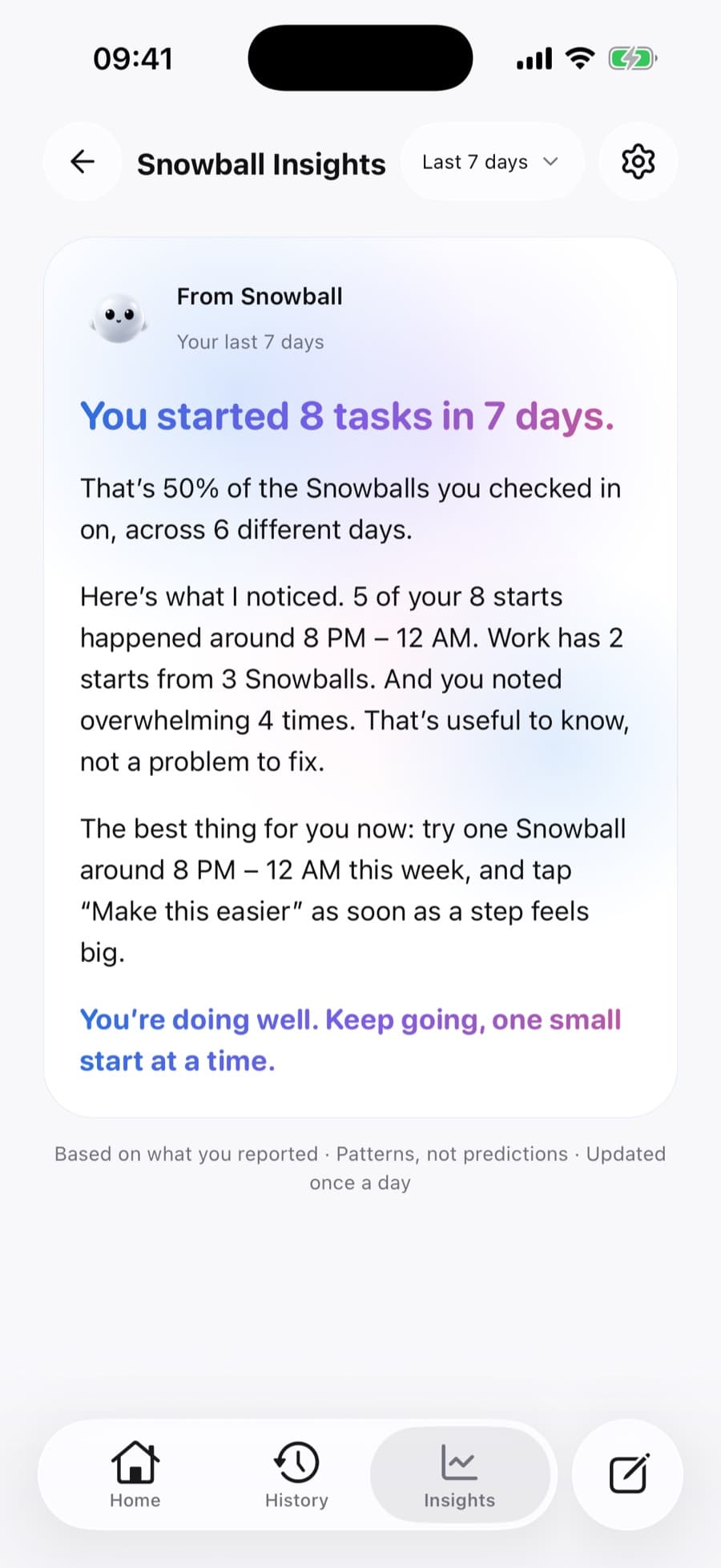
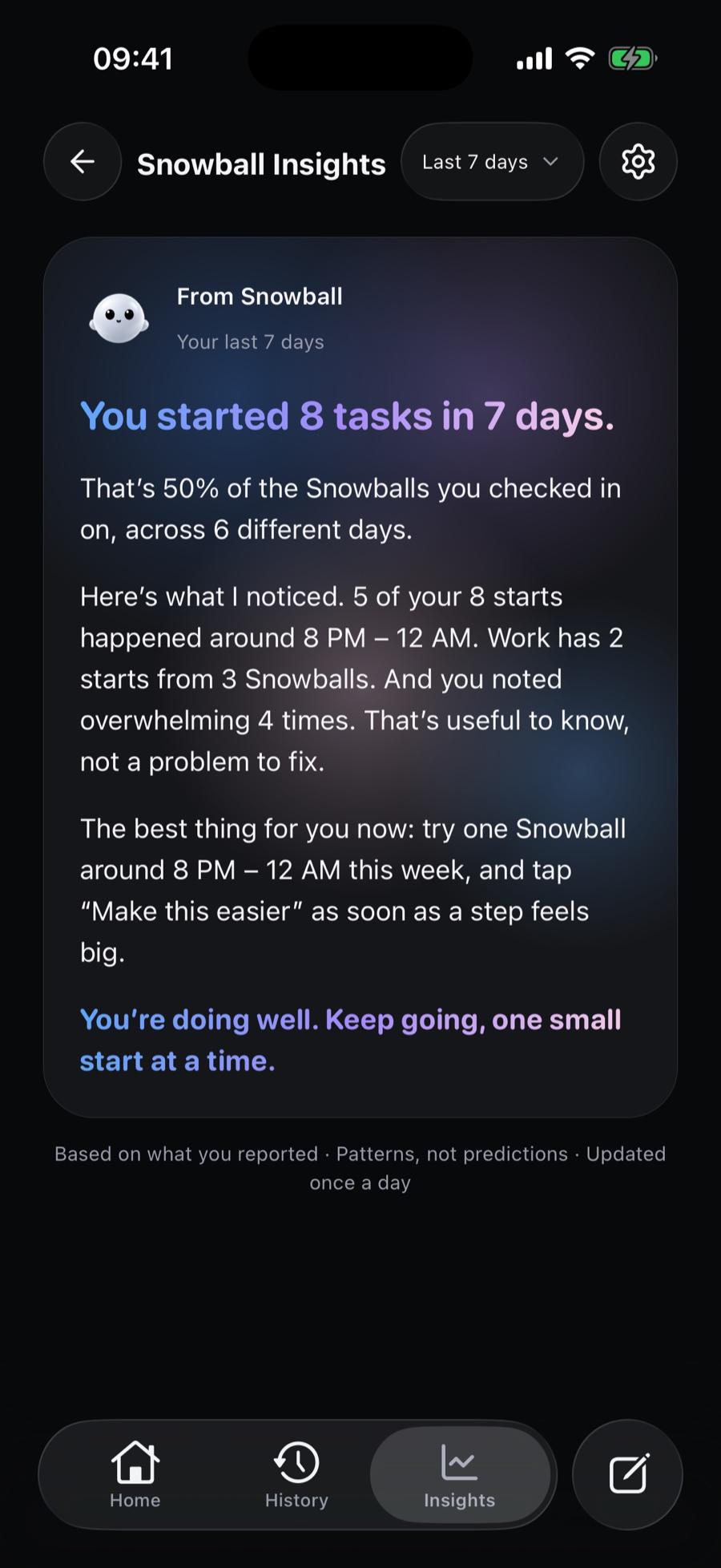
Snowball works with one task at a time, which suits days when your list feels too big. Once you’ve picked your one thing, tell Snowball about it. It turns that task into a short plan that ends with it done, plus one tiny first move for step one.
You go step by step, marking each one done. If something new pops into your head along the way, you can catch it for later instead of adding it to the pile in your head.
Questions people ask
What do I do when I have too many tasks and don’t know where to start?
Write everything down, then ask which tasks have a real consequence soon, like a deadline, a fee or someone waiting on you. Pick one of those and write it on a separate note. Hide the rest of the list. Do the smallest first move on that one task, and only choose the next task once it’s finished.
How do I prioritize when everything feels urgent?
Feeling urgent and being urgent aren’t the same. For each item, ask: what actually happens if this isn’t done by Friday? If the answer is a fee, a missed deadline or someone blocked, it goes first. If the answer is “I’d feel bad” or “nothing much,” it can wait. Write it down so you don’t have to hold it in your head.
Is it bad to have a long to-do list?
A long master list is fine as a place to store ideas and tasks. The problem comes from looking at all of it when deciding what to do now. Keep the long list somewhere out of sight, and work from a short daily list with one to three items. Review the long list once a week.
Why does my to-do list make me anxious?
A long list can feel like a record of everything you haven’t done. Vague items like “sort life out” add to that, because you can’t tell where to begin. Turning items into concrete actions, sorting by real consequences and hiding the list while you work can make it feel less threatening. If anxiety is constant, a professional can help.
Does ADHD make to-do lists harder?
Many people with ADHD say lists become overwhelming quickly, especially when choosing between tasks or estimating how long things take. That doesn’t mean everyone who struggles with lists has ADHD. Strategies like picking one task, writing a clear first move and working with someone nearby can help anyone. A qualified professional can assess ongoing difficulties.
Sources and further reading (1)
- Centre for Clinical Interventions, procrastination resources — Self-help material on understanding procrastination and breaking tasks into manageable steps.