What Is Task Initiation? A Practical Way to Begin
Task initiation means getting from intending to do something to taking the first action. Learn how to identify the barrier and choose a manageable start.

Quick answer
Task initiation is the move from intending to do a task to taking its first action. If you know what to do but keep avoiding it, make the starting action concrete: open the email, read the question, or put one plate in the sink. Starting is a different job from finishing.
You can have a clear task list and still spend the afternoon looking at it. Adding another reminder might tell you what matters, but it doesn't necessarily make the first move feel easier. This guide focuses on that first move, rather than planning your whole day.
From ‘finish my presentation’ to a first action
- Put the laptop within reach.
- Open the presentation file.
- Read the title of the slide you need to change.
- Write one rough replacement sentence.
Already have the file open? Start at the sentence. Preparation is useful only if it leads into the task.
Starting, planning, and staying focused are different jobs
Planning identifies the work. Initiation gets you into it. Sustained attention helps you continue. A calendar can be useful for planning, but a time block labeled ‘presentation’ still leaves you with a decision about what to do first.
Replace that label with a visible action. ‘Read the last slide’ tells you where to put your attention. It also gives you a clear stopping point if you only have a minute.
Find the barrier without turning it into a questionnaire
Ask one question: what about this task makes the first move hard today? Your answer doesn't need to explain your personality. It only needs to help you choose a workable step.
- Too big: choose one file, one question, or one small area.
- Unclear: find the instructions and identify the next decision.
- Perfectionism: make a private draft you can revise later.
- Boring: choose a short unit with a visible finish.
- Low energy: move the needed object within reach, then reassess.
Use easy wins as a bridge, not a new chore list
An unrelated action, such as taking a sip of water, can be a starting cue. But tidying the desk for half an hour while the email stays unopened is still a detour. Choose one easy cue, then an action that touches the real task.
You can skip the cue entirely. For an easy task, opening the email and writing one line may be all the sequence you need. A complex task may need a few more actions to locate materials or understand the brief.
Does difficulty starting mean I have ADHD?
Difficulty starting alone doesn't establish a diagnosis. NIMH describes ADHD in adults as a persistent pattern of symptoms that interferes with functioning across areas of life. If difficulties are ongoing and affecting everyday life, a qualified professional can help assess them.
Questions people ask
Is task initiation the same as procrastination?
They overlap, but they describe different things. Initiation is the act of beginning; procrastination describes putting something off. This guide helps you choose a starting action without trying to diagnose the reason for a delay.
Do I have to do five phases every time?
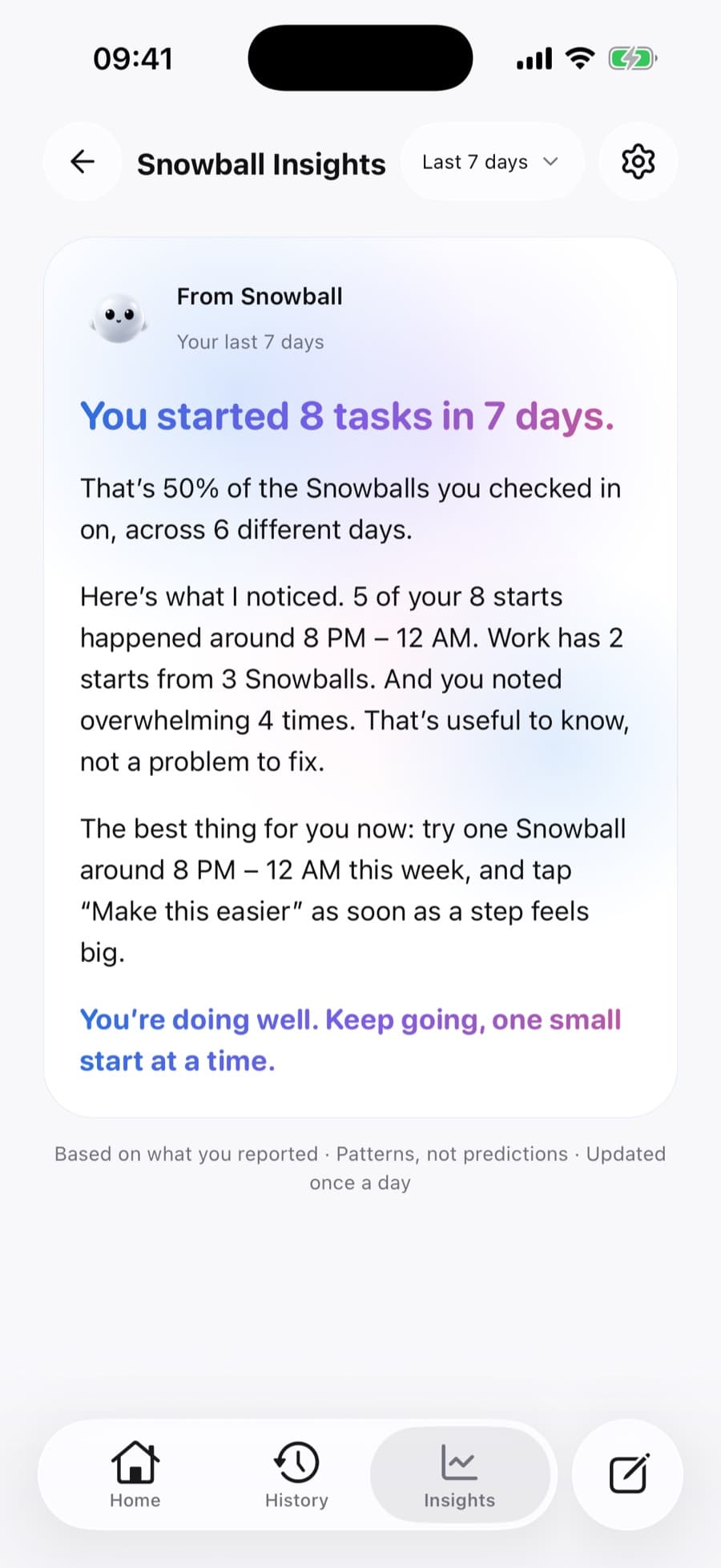
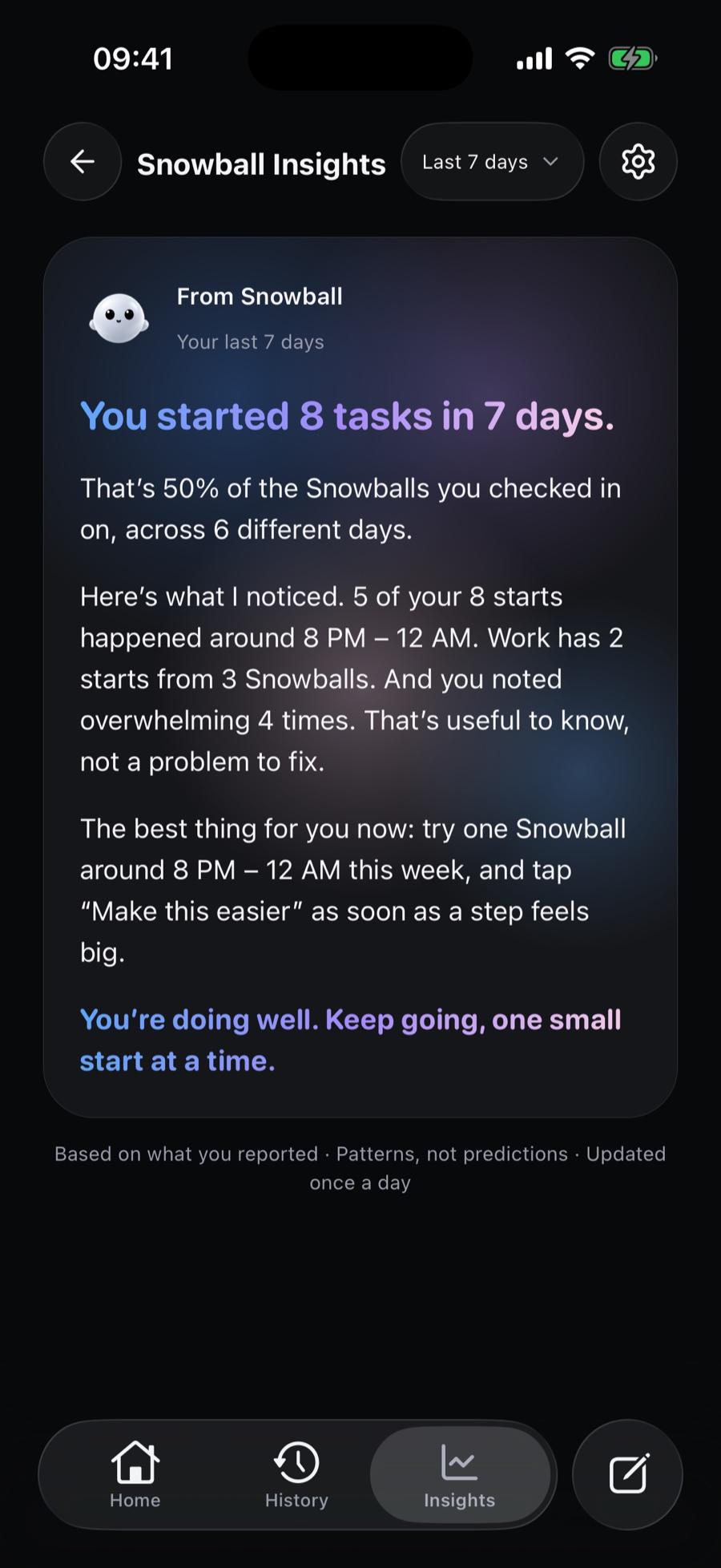
No. Snowball’s five phases are a design guide, not a required ritual. An easy task may take 2–3 actions; a complex task may need more. Leave the sequence as soon as you're ready to work.
Sources and further reading (1)
- National Institute of Mental Health: ADHD in adults — Cited in the guide above.