ADHD and Unopened Mail: How to Face the Pile and Deal With It
A calm way to open the stack, find what needs action, and stop new mail from piling up.

Quick answer
To deal with unopened mail when you have ADHD, make opening separate from acting. In one short session, open every envelope and sort it into four piles: recycle, file, read later and needs action. Then pick the single letter with the nearest deadline and do only its first step. Set up one mail spot so new letters can’t scatter.
A sequence to try: the pile on the hall table
- Carry the whole pile to the kitchen table and put a recycling bag on the floor next to you.
- Pick up the top envelope. Look only at the sender, not the contents.
- If it is obvious junk, like a takeaway menu or catalog, drop it straight in the bag.
- Open the next real letter and read just the first line and any date you can see.
- Put it on one of four spots: file, read later, needs action, or recycle.
- Repeat for ten minutes, then stop, even if a few envelopes are left.
If opening feels too hard, do a first pass that only removes junk. A smaller pile is easier to face tomorrow.
Why people with ADHD avoid opening mail
Mail avoidance usually isn’t about the paper. It is about what might be inside: a bill you can’t pay yet, a form you don’t understand, a reminder that something is already late. Every unopened envelope can feel like a possible problem, so the whole pile starts to feel like one big problem.
With ADHD, there is often an extra layer. Letters are boring until they become urgent, they need you to read dense text, and they usually lead to more tasks. Putting them aside feels like relief in the moment. Then the pile grows, the worry grows with it, and opening it gets harder.
Avoiding mail doesn’t on its own mean you have ADHD, and plenty of people feel this way about letters. If ongoing difficulty with everyday tasks worries you, a qualified professional can help.
How to face a pile of unopened mail
The trick is to split opening from dealing. When you sit down only to open and sort, you are not promising to pay, call or fill in anything today. That makes the first envelope much easier to pick up.
- Choose a set time, such as fifteen minutes after breakfast on Saturday.
- Gather every piece of mail in the house into one pile, including the bag in the car.
- Have a recycling bag, a pen and four sticky notes ready.
- Open and sort only. No paying, calling or replying during this session.
- Stop when the time is up and put the sorted piles somewhere safe.
If someone you trust can sit with you while you open it, that often helps. You don’t need them to read anything, just to be there.
Sort your mail into four piles
Four piles are enough. More categories mean more decisions, and decisions are what slow you down.
- Recycle: junk, flyers, envelopes and inserts you don’t need. Shred anything with personal details on it.
- File: statements and records you might need later but that ask nothing of you.
- Read later: newsletters, information leaflets, nothing with a date on it.
- Needs action: anything that asks you to pay, reply, sign, call, book or send something back.
What to do with letters that need action
Look through the needs-action pile and write the deadline on the outside of each letter or on a sticky note. Then line them up with the nearest date first. You don’t have to deal with all of them. You only need to know which one comes first.
Take that one letter and find its first physical move. Not “sort out the council tax”, but “find my account number on the letter” or “open the website printed at the top”. If it is something official, like taxes, benefits, fines or a legal letter, read it carefully and, if you are unsure, contact the organization that sent it or a qualified adviser before paying or signing anything.
For bills, forms and renewals beyond the mail pile, life admin with ADHD covers how to work through them step by step.
What if a letter is already overdue?
Finding an overdue letter is the moment most people want to put the pile back down. Try to treat it as information, not a verdict. Most organizations would much rather hear from you late than not at all.
Check what the letter actually says the next step is. Often it is contacting them, and many offer email, online chat or a callback, not only phone calls. If a call is the only option, how to make a phone call you dread has a simple script to lean on.
How to stop mail piling up again
Once the pile is sorted, a tiny system keeps it from coming back. Keep it boring and close to the front door, because that is where mail lands.
- One tray or basket for all incoming mail. Nothing goes anywhere else.
- A recycling bin right next to it, so junk never makes it inside.
- A ten-minute mail check once a week, at the same time.
- Paperless billing where you trust the sender, with emails going to a folder you actually check.
If email has become its own unopened pile, see ADHD email avoidance.
How Snowball helps with unopened mail
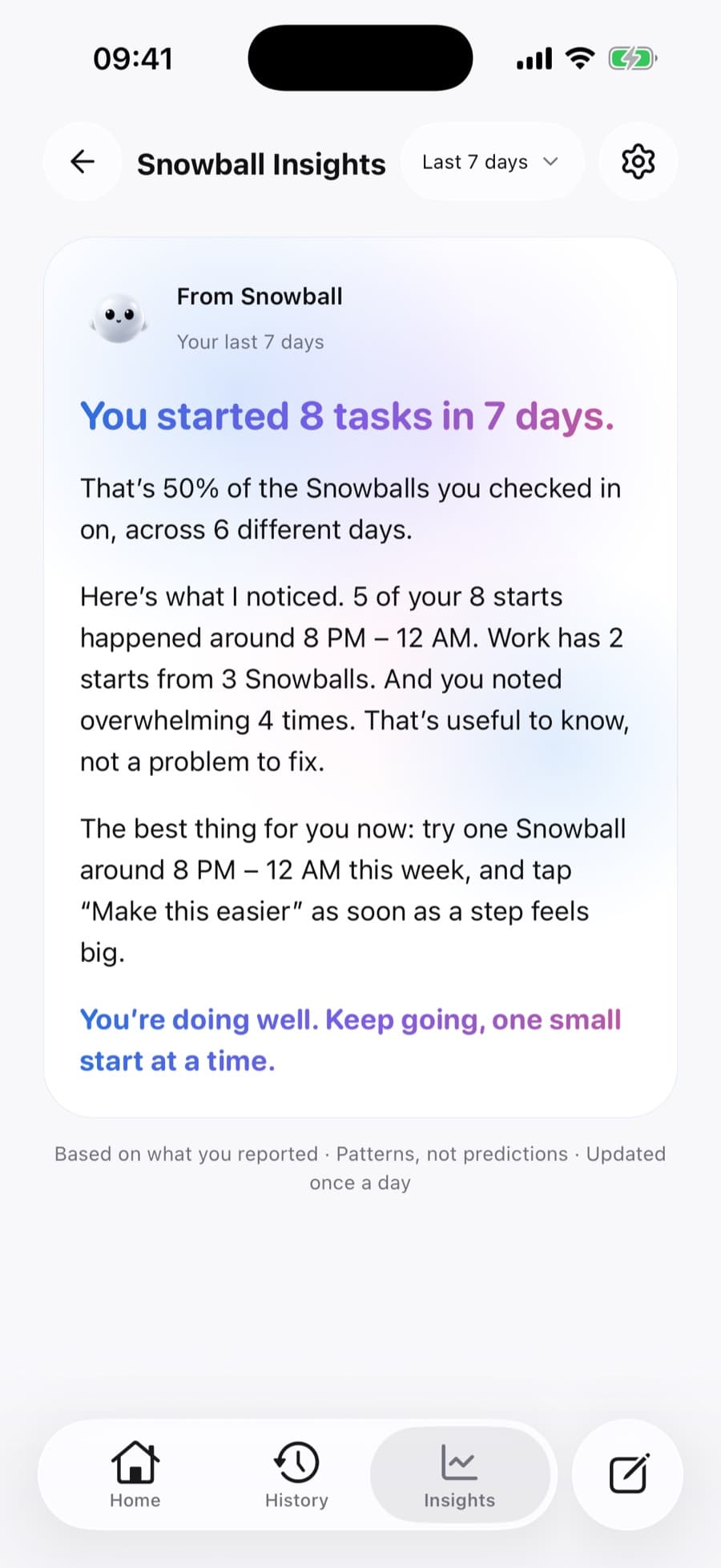
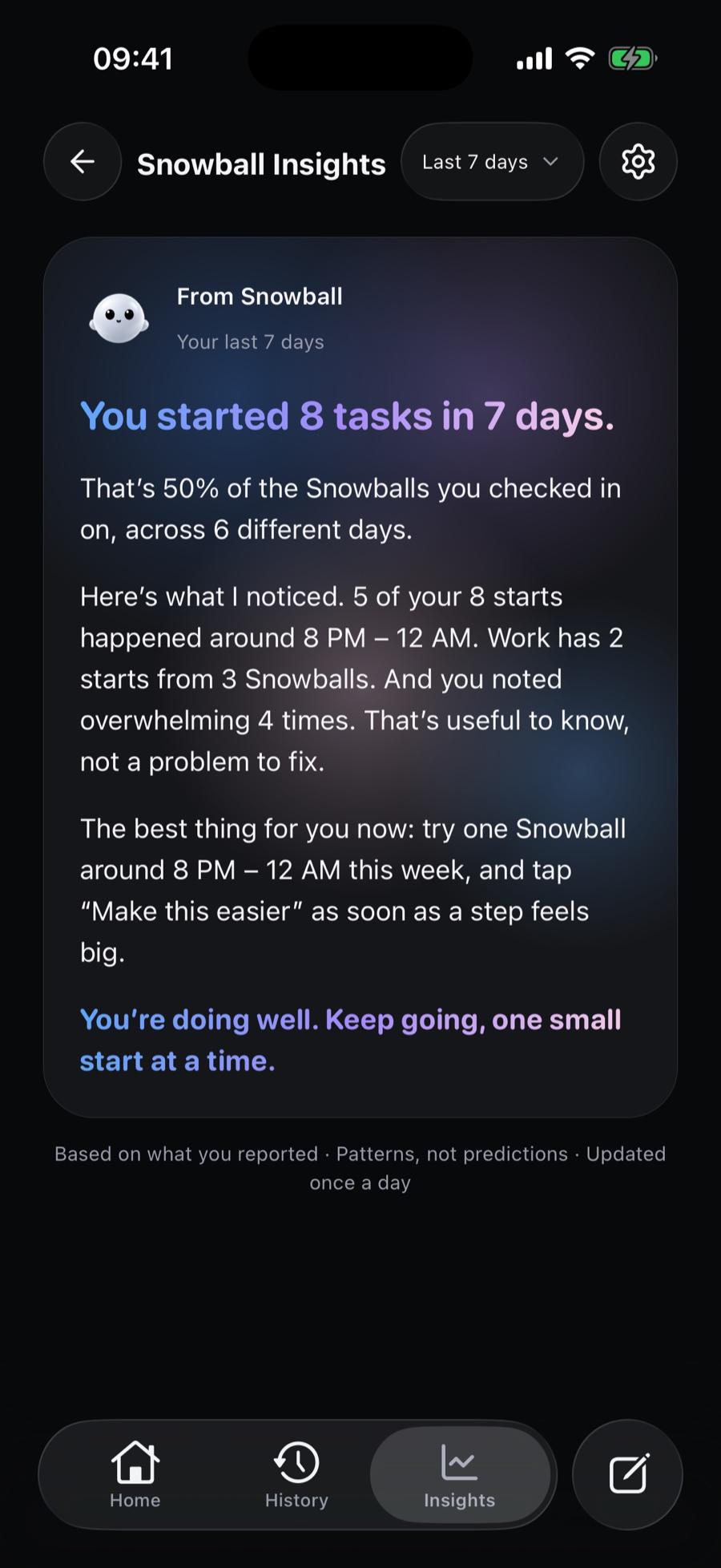
You can type what you are stuck on, like “a month of unopened post on the hall table”, and Snowball gives you a short plan that ends with the pile dealt with, plus one tiny first move you can do right now.
With Snowball+, you can snap a photo of a letter and Snowball reads it, then gives steps that name its real amounts, reference numbers and deadlines. Photos are not stored. AI can misread things, so always check the letter yourself, and you decide what to pay, send or sign.
Questions people ask
Why do I avoid opening my mail?
Mail often carries bad news, money worries or tasks you don’t know how to do, so avoiding it gives short-term relief. The longer letters sit, the more they feel like a threat, which makes opening them even harder. Separating opening from acting, and doing it in short timed sessions, can break that cycle.
Is mail avoidance an ADHD thing?
Many people with ADHD describe avoiding mail, because letters combine boring reading, possible bad news and follow-up tasks. But lots of people without ADHD avoid mail too, and avoiding it doesn’t on its own mean you have ADHD. If everyday tasks are consistently hard and affecting your life, a qualified professional can assess what is going on.
How do I deal with months of unopened mail?
Gather it all in one place, then work in short sessions of ten to fifteen minutes. First remove the obvious junk. Then open and sort the rest into recycle, file, read later and needs action. Write the deadline on each action letter, order them by date, and handle only the first one before stopping.
What should I do if I find an overdue bill in the pile?
Read what the letter says the next step is, then contact the company or organization through a channel you can manage, such as email, online chat or phone. Many will discuss payment plans or extensions. Don’t pay through links or numbers you can’t confirm belong to the sender, and seek free debt advice if you are struggling.
Can an app read my letters for me?
Some apps can. With Snowball+, you can photograph a letter or form and Snowball reads it and gives you steps that mention its real amounts and deadlines. Photos are not stored. AI can make mistakes, so check the details against the letter itself and decide for yourself what to pay or send.