ADHD at Work: How to Start the Tasks You Keep Pushing Back
The tasks you avoid at work usually have one thing in common: nobody, including you, has defined the first move.

Quick answer
With ADHD at work, the tasks that sit untouched are usually vague, long or emotionally loaded. Make them concrete: write the first physical step, ask a clarifying question if the goal is fuzzy, and work on the task in short blocks right after a natural trigger, like the end of a meeting. Structure from outside, such as check-ins and shared deadlines, helps too.
Starting the quarterly report you’ve moved to “tomorrow” three times
- Open last quarter’s report and save a copy with this quarter’s name.
- Delete every number in the copy, leaving only the headings.
- Under the first heading, write one bullet in plain words, like “sales up, need figure.”
- Open the spreadsheet that has that figure.
- Paste the figure in and highlight it yellow to check later.
Reusing an old document gives you structure for free. If there’s no previous version, ask a colleague for an example before you start from a blank page.
Why ADHD makes some work tasks impossible to start
At work, ADHD often shows up as a pile of half-started or never-started tasks, while urgent things get done in a rush. The avoided tasks usually share a few traits: they’re vague (“look into the vendor issue”), long (“write the strategy doc”), dull, or tied to someone’s judgment.
Your brain isn’t refusing the work. It can’t find a starting point that feels doable, so it keeps choosing quick, clear tasks like answering a chat message. Seeing that pattern is useful, because it tells you what to fix: the start, not your character. Task paralysis describes that frozen feeling in more detail.
How to start a vague task at work
Vague tasks are the most common ones to stall. Before you try to do the task, spend five minutes defining it. Write a single sentence: “This is done when…” If you can’t finish that sentence, the task isn’t ready yet, and that’s the real reason you’ve been avoiding it.
- Write “This is done when…” and finish the sentence as best you can.
- List what you don’t know, as questions.
- Pick the one question that blocks everything else.
- Ask it (see the next section) or find the answer in one document.
- Write the first physical step, like “open the vendor contract to page 3.”
How to ask for clarity without feeling stupid
Asking a question can feel like admitting you’re behind. In practice, a clear question early is far better than a confused deliverable late, and most managers prefer it. Keep it short and specific, and show what you already understand.
- “To make sure I get this right: is the goal X or Y?”
- “Would a one-page summary work for Friday, or do you need the full analysis?”
- “What does finished look like for this?”
- “Is there an earlier example I can work from?”
Asking for an example is one of the fastest ways to turn a blank page into an edit, which is much easier to start.
Using meetings as starting triggers
Meetings break the day into pieces, which can make it hard to start anything big. Instead of fighting that, use the end of each meeting as a trigger. The five minutes right after a meeting are when you know the most about what was decided and when the follow-up feels most real.
Before you leave the call or the room, write the one next action you own. Then do the first move of it immediately: open the document, create the email draft, add the date to your calendar. Even two minutes of follow-up turns “I’ll do it later” into something already in motion.
How to write a report or document you’ve been dreading
Long documents feel like one huge block. Break them by section and start with the easiest one, not the first one. Writing a rough version in bullets is a valid first draft. Polishing comes later and is a separate task.
If you notice you keep rewriting the first paragraph, perfectionism may be the brake, not attention. Perfectionism and procrastination covers how to aim for “good enough to send for feedback” first.
- Draft headings first, then fill the one you know best.
- Use placeholders like [CHECK] instead of stopping to look things up.
- Book a time to share the draft, so there’s a real reason to finish.
Structure that helps ADHD at work
Outside structure often does what willpower can’t. Small changes to how your day is set up can make starting much easier.
- Keep one visible list of today’s three tasks, not your whole backlog.
- Block focused time in your calendar and treat it like a meeting.
- Ask for short check-ins on long projects so there are mini deadlines.
- Work next to a colleague, or on a quiet video call, for dull tasks.
- Batch small tasks like expenses into one block a week.
Workplace adjustments for ADHD
In many countries, employers can make adjustments for people with ADHD, such as written instructions after meetings, flexible hours, noise-cancelling headphones, a quieter desk or more frequent check-ins. What’s available and what you’re entitled to depends on where you live and where you work.
If you’re considering asking, your HR team, an occupational health service or an employment advice organization in your country can explain your options. You don’t need a formal request to try many of these ideas on your own, like asking for an agenda or a written summary.
How Snowball helps with work tasks
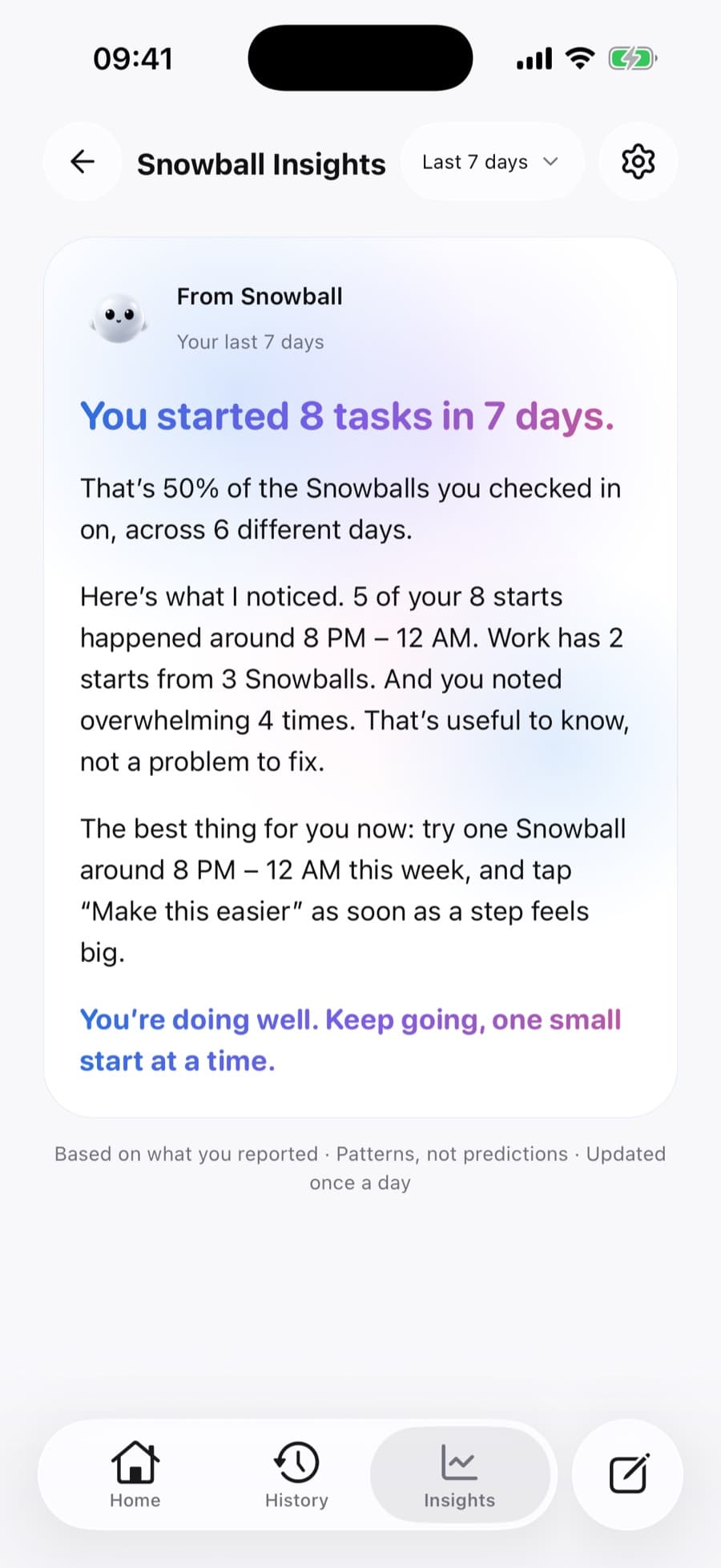
When a work task keeps sliding, you can type it into Snowball as you’d say it, like “write the client proposal for Monday.” It turns it into a short plan that ends with the task done and gives you one tiny first move for step one. You can skip a step, ask it to change one, or stop and come back where you left off.
If you add some context in About you, like your role or how you like to work, plans can fit your job better. That information stays on your iPhone. Snowball can be wrong, so you review anything before you send it.
Questions people ask
How does ADHD affect work performance?
ADHD can make it harder to start tasks, keep track of time, follow long meetings, organize work and finish projects that have no immediate deadline. It varies a lot from person to person, and it says nothing about how capable you are. Structure, clear expectations and tasks broken into concrete steps often make a big difference.
Should I tell my employer I have ADHD?
That’s a personal choice, and the right answer depends on your workplace, your country and how you feel about it. Telling your employer can make it easier to ask for adjustments. You can also ask for helpful changes, like written instructions, without sharing a diagnosis. An employment advice service or HR can explain your rights where you live.
Why do I procrastinate at work even on tasks I care about?
Caring about a task can make it harder to start, because the stakes feel higher. Vague goals, fear of judgment and no clear first step all add to the pull of avoidance. Defining what “done” means, lowering the bar for a first draft and starting with one small physical move usually help more than pushing harder.
How do I stay on track after meetings with ADHD?
Write down the one action you own before the meeting ends, then do its first move within five minutes, while it’s still fresh. Ask for written notes or action items if you find it hard to remember what was decided. A shared list that everyone sees can also act as a gentle outside reminder.
What are good jobs for people with ADHD?
There’s no single right job. Many people with ADHD do well in roles with variety, clear short-term goals, movement or quick feedback. But any job can work better with the right structure. It often helps to notice which tasks you start easily and which you avoid, then shape your role toward the first kind where you can.
Sources and further reading (1)
- NHS, “Attention deficit hyperactivity disorder (ADHD)” — Describes common adult ADHD traits, including difficulty organizing tasks and starting or finishing them.