Executive Dysfunction and Task Initiation: Why Starting Is So Hard
A plain-language guide to the skills behind starting, and the supports that fill the gaps.

Quick answer
Executive dysfunction is a plain-language term for trouble with executive function skills: planning, organizing, remembering steps, managing time and starting tasks. Task initiation, the ability to begin, is often the hardest part. It isn’t laziness. Outside supports help: clear first steps, visible reminders, set routines, fewer choices and another person nearby.
Booking a doctor’s appointment you’ve meant to make for a month
- Find the clinic’s name in your phone contacts or an old message.
- Check their booking page or opening hours. Write down the next time they’re open.
- Write one line on a note: “I’d like to book an appointment about …”
- Put your calendar app on screen so you can check dates while you book.
- Book online, or dial the number and read your line.
If calling is the hard part, see if the clinic offers online booking or messaging. For medical questions, rely on the clinic’s own staff and advice.
What is executive function?
Executive function is a set of mental skills that help you manage yourself and get things done. Think of them as the management team in your head: they decide what to do, in what order, and when to start and stop.
- Planning: figuring out the steps to get from here to done.
- Organizing: keeping track of things, information and materials.
- Working memory: holding a few details in mind while you use them.
- Time management: sensing how long things take and when to begin.
- Task initiation: actually starting, without waiting for pressure.
- Shifting: switching between tasks or adjusting when plans change.
What does executive dysfunction mean?
“Executive dysfunction” is a common phrase for when those skills don’t work smoothly. It isn’t a diagnosis by itself. It can show up with ADHD, and people also describe it with autism, depression, anxiety, burnout, after illness or under heavy stress.
Everyone has days when these skills wobble. What people usually mean by executive dysfunction is a pattern where it happens a lot, and where it gets in the way of daily life.
Why task initiation is so often the sticking point
Starting asks a lot of executive function at the same moment. You have to choose the task, picture the first step, gather what you need, estimate time and push past any discomfort. If any part of that chain is weak, the whole start stalls.
That’s why someone can be skilled and motivated and still be stuck in front of an insurance form for weeks. The problem isn’t the ability to fill it in. It’s the many invisible decisions that come before the first field.
What executive dysfunction looks like day to day
It rarely looks dramatic. It looks like a lot of ordinary moments that add up:
- Clean laundry living in the basket for a week because folding has too many steps.
- Knowing you need to book an appointment but never finding “the right time.”
- Starting three tasks and finishing none.
- Forgetting the next step the moment you’re interrupted.
- Being able to start only when the deadline is close and panic kicks in. More in time blindness and starting.
Practical supports for starting tasks
Supports work by moving some executive function outside your head. Instead of relying on memory and willpower, you rely on things you can see and follow.
- Write the first step, not the task. “Open the insurance portal” beats “sort insurance.”
- Make it visible. Put the form on your keyboard, the laundry basket on the bed.
- Use checklists for repeating tasks. A morning or bill-paying checklist saves you rebuilding the plan every time.
- Reduce choices. Pick a default time, place and order for common tasks.
- Use external time cues. Visual timers and alarms with labels like “Start laundry now.”
- Add a person. Working alongside someone, or body doubling, gives your start a structure.
A simple routine for any stuck task
When you’re stuck on something like an overdue form, use the same short routine each time so you don’t need to plan it fresh:
- Name the task in one sentence.
- Write the first physical action, small enough to do in two minutes.
- Gather only what that action needs.
- Do it, then write the next action before you stop.
Writing the next step before stopping makes it much easier to restart later. For official forms, money or legal matters, check with the organization or a qualified professional if anything is unclear.
Executive dysfunction is not a character flaw
If you’ve been called lazy, disorganized or careless, it’s easy to believe it. But struggling with these skills says nothing about your worth or intelligence. Supports aren’t a crutch. They’re the same thing a well-run office uses: lists, calendars, and clear next steps.
If these difficulties are long-standing or affect your work, home or relationships, a doctor or qualified professional can help figure out what’s behind them. This article can’t diagnose anything, and the right support depends on the cause.
How Snowball helps with task initiation
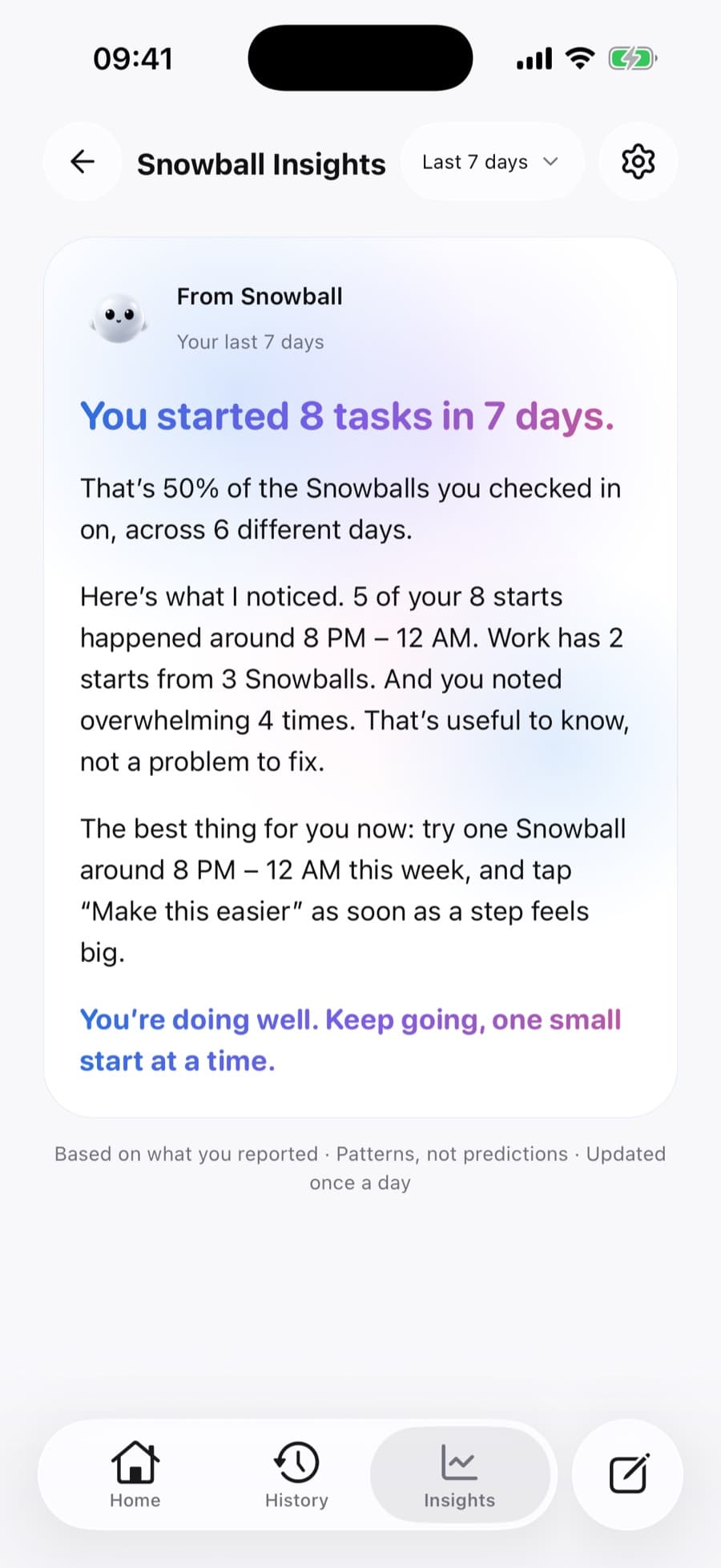
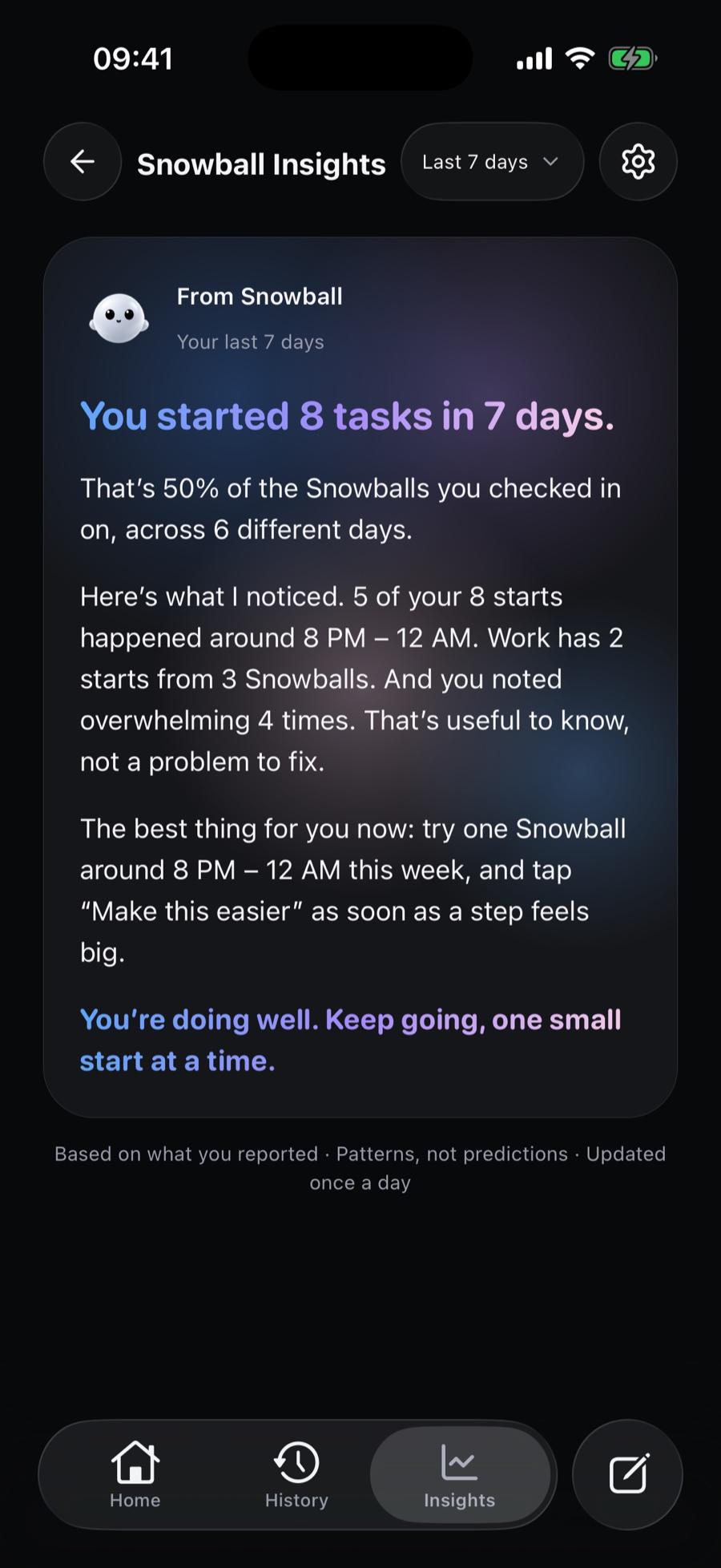
Snowball acts as an outside planner for the moment of starting. You type what you’re stuck on, and it turns it into a short plan that ends with the task done, with one tiny first move ready to go. It keeps your place if you stop, so you don’t have to remember where you were.
With Snowball+, you can snap a photo of a letter or form and get steps that name its real fields and deadlines. Photos aren’t stored. It’s a productivity tool, not a diagnosis or treatment, and you decide what to send or submit. For more on the first step, read task initiation.
Questions people ask
Is executive dysfunction the same as ADHD?
No. Executive function difficulties are common in ADHD, but they’re not the same thing. People also describe executive dysfunction with autism, depression, anxiety, burnout, brain injury and high stress. Only a qualified professional can assess whether ADHD or something else is involved.
What is task initiation?
Task initiation is the ability to begin a task when it needs to be done, without waiting for pressure like a deadline. It’s one of the executive function skills. When it’s hard, you may know exactly what to do and still not be able to start.
Can you improve executive function?
Many people find daily life much easier with the right supports: routines, checklists, visible reminders, breaking tasks into steps and working alongside others. A professional can also suggest strategies and, where relevant, discuss treatment options. The goal is usually to build a system around you, not to force harder.
Why can I start some tasks but not others?
Tasks that are interesting, urgent or clearly structured are easier to start. Tasks that are boring, vague, multi-step or emotionally loaded, like paperwork or a hard conversation, need more executive function. Making those tasks clearer and more concrete closes some of the gap.
Is executive dysfunction an excuse?
Understanding why something is hard isn’t an excuse. It’s information. It helps you choose supports that work instead of relying on guilt. You can still take responsibility for your tasks while recognizing that you may need a different route to get them done.
Sources and further reading (2)
- NIMH, “Attention-Deficit/Hyperactivity Disorder in Adults: What You Need to Know” — Describes difficulties with organization and managing tasks that adults with ADHD can experience.
- CDC, “Attention-Deficit / Hyperactivity Disorder (ADHD)” — General information on ADHD and the importance of professional diagnosis.