How to Get Things Done on a Low Energy Day (When You Have No Motivation)
Some days your tank is nearly empty. You can still move something forward, as long as you shrink the task to fit.

Quick answer
On a low energy day, shrink each task to its minimum version: the smallest result that still counts. Start gently, sitting down if you need to, and pick one or two things that really matter. Do the easiest first move, then rest. Progress on a hard day looks smaller, and that’s fine. If low energy or low mood lasts for weeks, talk to a doctor.
Getting laundry done when you’re running on empty
- Sit on the edge of the bed. Don’t stand yet.
- Pull the clean laundry pile next to you.
- Find only the socks and pair them.
- Put the paired socks in the drawer.
- Stop. Decide whether to do one more category or leave it for tomorrow.
The minimum version of “fold the laundry” might be just socks and underwear. That still counts. Tomorrow’s you will thank you for clean socks.
Why everything feels harder on a low energy day
On a low energy day, every task costs more than usual. Things that normally take ten minutes feel like climbing a hill. Poor sleep, stress, illness, hormones, a hard week or just a bad day can all play a part.
Low motivation often follows low energy. It isn’t a character flaw. It’s your body and mind signaling that resources are low. The goal isn’t to push through as if it were a normal day. It’s to find what you can do with the energy you actually have.
Shrink every task to its minimum version
Every task has a full version and a minimum version. The minimum version is the smallest thing that still moves you forward or prevents a problem. On low energy days, aim only for the minimum.
- Cook dinner → make toast and eat a piece of fruit.
- Clean the kitchen → put dirty dishes in the sink with water.
- Answer emails → reply to the one that’s time-sensitive.
- Go to the gym → walk around the block once.
- Write the report → open the file and write three bullet points.
Minimum versions aren’t laziness. They protect your energy so you can do more when you feel better.
Start gently instead of starting big
When energy is low, the first move should be almost too easy. Instead of “clean the bathroom,” try “put the toilet cleaner on the counter.” Instead of “start the essay,” try “open the document and type the title.”
Gentle starts make the next step feel possible. If you want more help finding that first move, see how to start a task when you can’t.
- Do the task sitting down if you can.
- Bring the task to you, like a laptop on the couch or paperwork in bed.
- Do it in pajamas. Nobody is grading you.
- Pair it with comfort: a warm drink, a podcast, a blanket.
Pick one or two things that really matter
A low energy day isn’t the day for a full to-do list. Ask: what would cause a real problem if it doesn’t happen today? A bill due today, a medication refill, feeding a pet, a work message someone is waiting on. Do those, in their minimum versions, and let the rest wait.
If your list is long and everything feels urgent, this guide to feeling overwhelmed by your to-do list can help you sort it.
Work in short bursts with real rests
Try a 10-minute work, 10-minute rest rhythm. Set a timer, do one small piece, then rest properly: lie down, close your eyes, stretch or drink water. Scrolling often feels like rest but can leave you more drained.
- Pick one minimum task.
- Set a 10-minute timer and start the first tiny move.
- When the timer ends, stop, even mid-task.
- Rest for 10 minutes away from screens if you can.
- Check in: one more round, or done for today?
Make tomorrow a little easier
If you have a bit of energy left, spend it on your future self. Put tomorrow’s clothes out. Fill a water bottle. Write down where you left off on a task. These small acts make the next day easier to start, whatever your energy looks like.
When low energy is more than a bad day
Everyone has low energy days. But if you feel exhausted or low most days for two weeks or more, lose interest in things you usually enjoy, or struggle to get through basic daily tasks, please talk to a doctor or another qualified professional. Persistent low mood and fatigue can have many causes, and they deserve proper support.
If you ever feel unsafe or have thoughts of harming yourself, contact your local emergency number or a crisis line right away.
How Snowball helps on low energy days
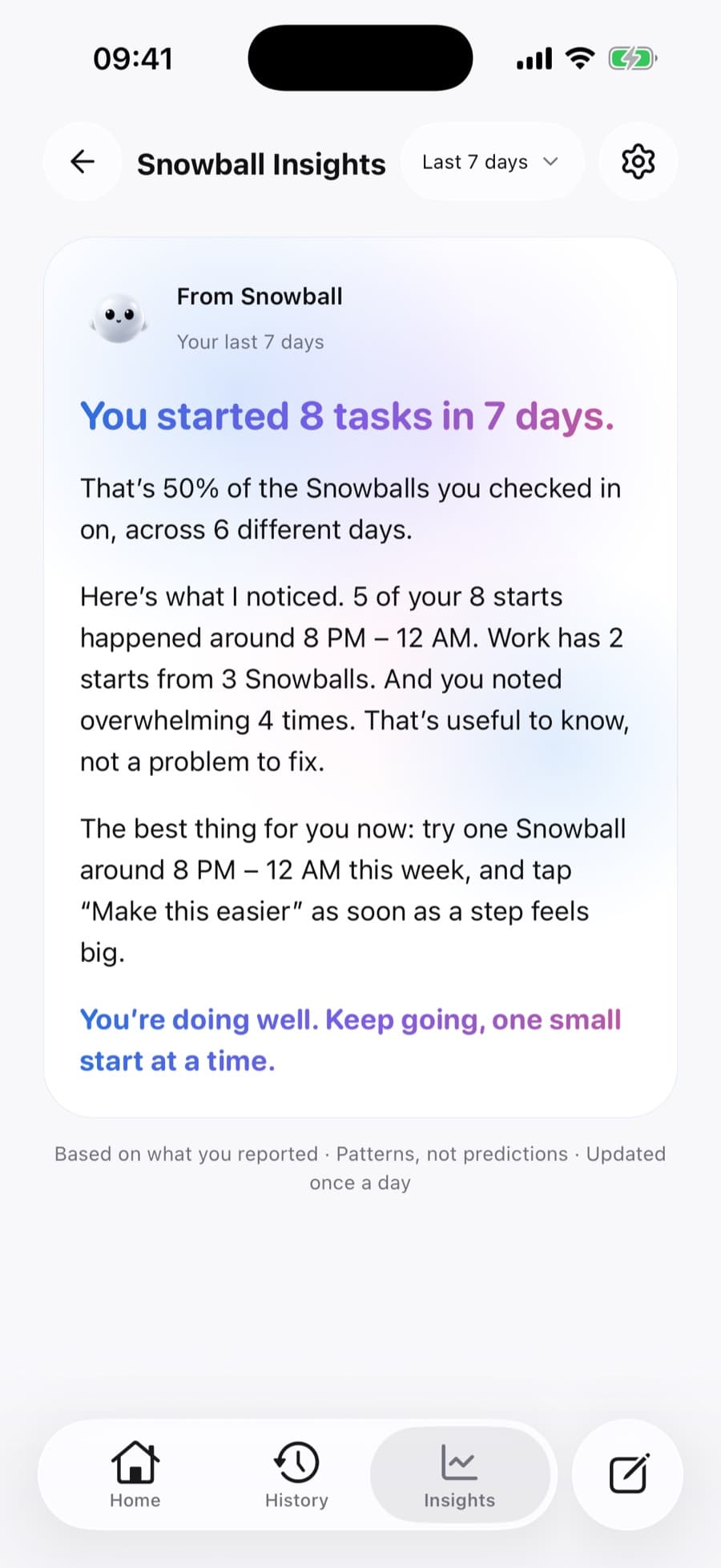
Snowball has a Low Energy mode for days like this. You tell Snowball what you’re stuck on, and it gives you the same plan to get it done, with gentler ways to start each step. For example, “pay the electricity bill” might start with “open the email from the company and leave it open,” rather than logging in and paying straight away.
You go one step at a time, and you can stop for today whenever you need to. Snowball keeps your place, so picking it back up tomorrow doesn’t mean starting over.
Questions people ask
How do I get motivated when I have no energy?
Don’t wait for motivation to show up first. On low energy days, action usually comes before motivation. Pick the smallest version of one task and do only the first tiny move, like opening the file or picking up one item. Often that small start makes the next step feel possible. If it doesn’t, that’s okay. Rest and try again later.
Is it okay to do nothing on a low energy day?
Sometimes rest is the right choice, especially if you’re sick or worn out. Try to handle anything that would cause a real problem if missed, like a bill due today or a pet that needs feeding, in its minimum version. Then rest without guilt. Rest is part of how energy comes back.
Why do I have no motivation to do anything?
There can be many reasons: poor sleep, stress, burnout, illness, a task that feels too big, or low mood. Sometimes it’s just a hard day. If lack of motivation lasts for weeks or comes with feeling down, hopeless or withdrawn, talk to a doctor or a mental health professional. You don’t have to figure it out alone.
Do people with ADHD have more low energy days?
Many people with ADHD describe days where everything feels harder to start, and energy can feel very up and down. But low energy has many possible causes, and it doesn’t on its own point to ADHD or anything else. If it’s a regular struggle, a qualified professional can help you work out what’s going on.
What are good tasks for a low energy day?
Choose tasks that are short, low-stakes and can be done sitting down: pairing socks, replying to one message, sorting the mail into keep and recycle, writing tomorrow’s plan, or putting a few things back where they go. Avoid big decisions, long phone calls and anything that needs careful checking, like submitting official forms.
Sources and further reading (1)
- NIMH, “Attention-Deficit/Hyperactivity Disorder in Adults: What You Need to Know” — Background on adult ADHD and on talking with a health care provider about ongoing difficulties.