ADHD Waiting Mode: Why You Can’t Do Anything Before an Appointment
One thing on the calendar at 3pm, and the whole morning disappears. Here’s what’s happening and how to plan the gap.

Quick answer
Waiting mode is the feeling that you can’t start anything because an appointment or event is coming up later. Many people with ADHD describe losing hours this way. It helps to set an alarm for when you actually need to leave, then fill the gap with small, self-contained tasks that are easy to stop. Planning the gap ahead of time makes it easier to use.
Using the morning before a 2pm dentist appointment
- Look up how long the trip takes and set an alarm for when you need to leave, plus a 15-minute warning alarm.
- Put your keys, wallet and insurance card by the door now.
- Write three small tasks on a sticky note: water plants, reply to one text, empty the dishwasher.
- Start the first one. Just fill the watering can.
- When you finish a task, glance at the sticky note, not the clock.
The alarm does the clock-watching for you. Your only job between now and the alarm is the next small thing on the note.
What is ADHD waiting mode?
Waiting mode is a popular name for a common experience: you have something scheduled later, like a doctor’s appointment, a call or a pickup, and everything before it feels on hold. You mean to do things, but you end up scrolling, checking the time and not starting anything.
It can happen with a 4pm meeting on a free day, or even an evening plan that freezes the afternoon. Many people with ADHD describe it, though it isn’t a diagnostic term, and experiencing it doesn’t on its own mean you have ADHD.
Why you can’t do anything before an appointment
Part of your attention is guarding the appointment. You’re worried that if you get absorbed in something, you’ll lose track of time and be late. So your brain refuses to commit to anything at all.
Time can also be hard to judge. If you struggle to sense how long things take, it feels risky to start a task that might run over. This overlaps with time blindness, and the fix is similar: move the timekeeping outside your head.
- Fear of losing track of time and missing the event.
- Uncertainty about how long tasks take.
- The gap feels “too short” to be worth starting anything real.
- Low-level anxiety about the appointment itself.
Set an alarm so your brain can let go
The single most helpful move is to make the clock someone else’s job. Work backward from the appointment: when do you need to leave, and how long do you need to get ready? Set an alarm for that time, and a warning alarm 15 minutes earlier.
Once the alarms are set, tell yourself out loud: “The alarm will tell me. I don’t need to watch the clock.” It sounds small, but it gives your attention permission to go somewhere else.
Pick small tasks that are easy to stop
Waiting mode isn’t the time for a big project that needs deep focus. Choose tasks that have a clear end, take 5 to 20 minutes and won’t leave a mess if the alarm goes off halfway.
- Empty the dishwasher or run one load of laundry.
- Reply to two texts or one email you’ve been avoiding.
- Clear one shelf, one drawer or the top of your desk.
- Pay one bill you’ve already checked, or add a reminder to review it.
- Prep tonight’s dinner ingredients.
- Read one chapter or watch one short lesson.
Avoid tasks that are hard to pause, like deep cleaning the bathroom or starting a long phone queue, right before you need to leave.
Plan the gap before the day starts
Waiting mode is easiest to beat the evening before or first thing in the morning. When you see an appointment on tomorrow’s calendar, spend two minutes deciding what the gap is for.
- Write the appointment time and your leave time.
- Count the real gap. Subtract getting ready and travel.
- Choose one main task that fits the gap, plus two small backups.
- Put everything for the appointment by the door the night before.
- Set both alarms before you go to bed.
Use timers in short blocks
Instead of one long stretch of waiting, split the gap into short timed blocks. Set a timer for 20 minutes, work on one small task, then take a two-minute break and choose the next one. Each block has its own clear ending, so the appointment feels less like it’s hanging over everything.
If even a 20-minute block feels like too much, try the two-minute rule to get moving, then decide whether to keep going.
What if you lose the day anyway?
Some days the waiting wins. That’s okay. Notice what made it harder: no alarm set, no plan for the gap, or a stressful appointment. Next time, fix one of those things rather than trying to fix all of them.
If you often lose whole days around scheduled events and it’s affecting your work or relationships, it’s worth raising with a doctor or another qualified professional.
How Snowball helps with waiting mode
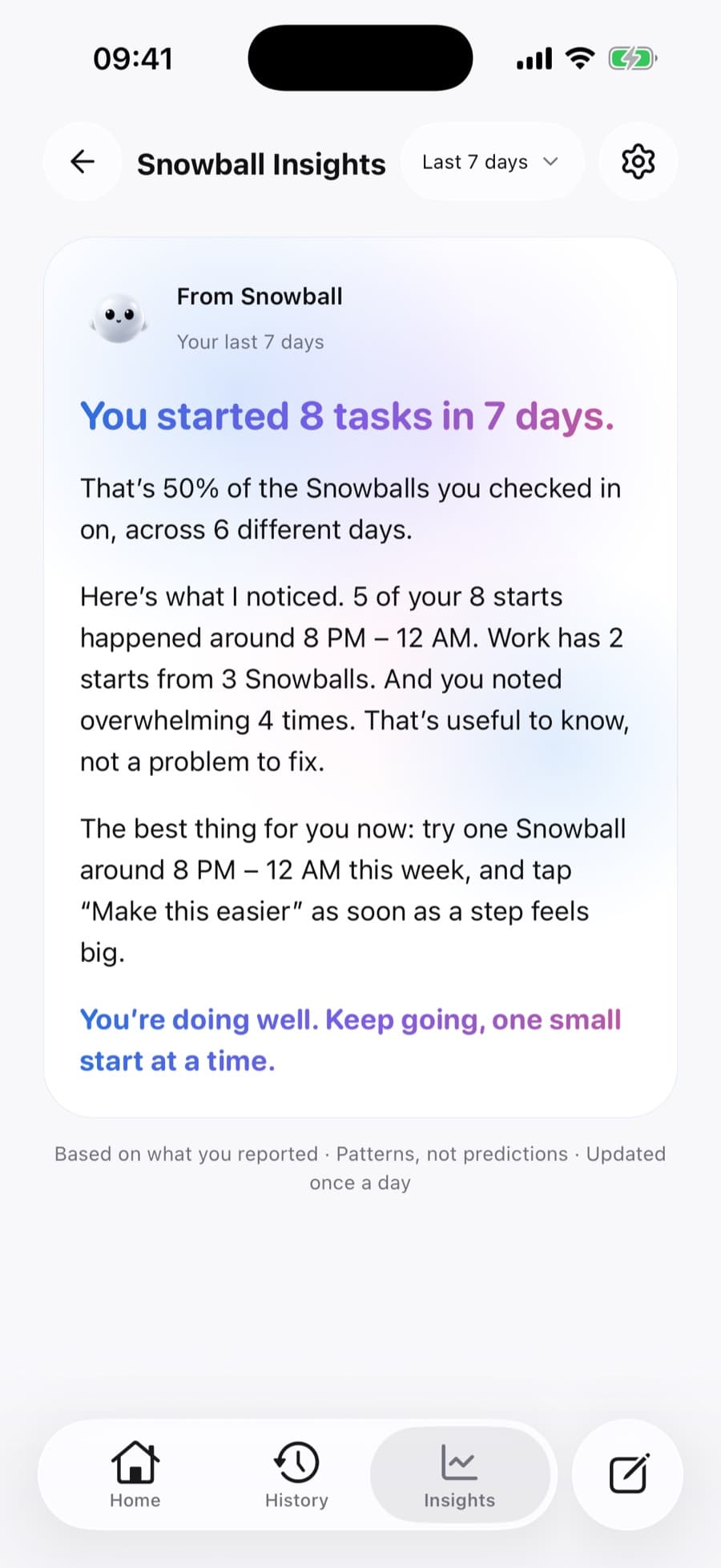
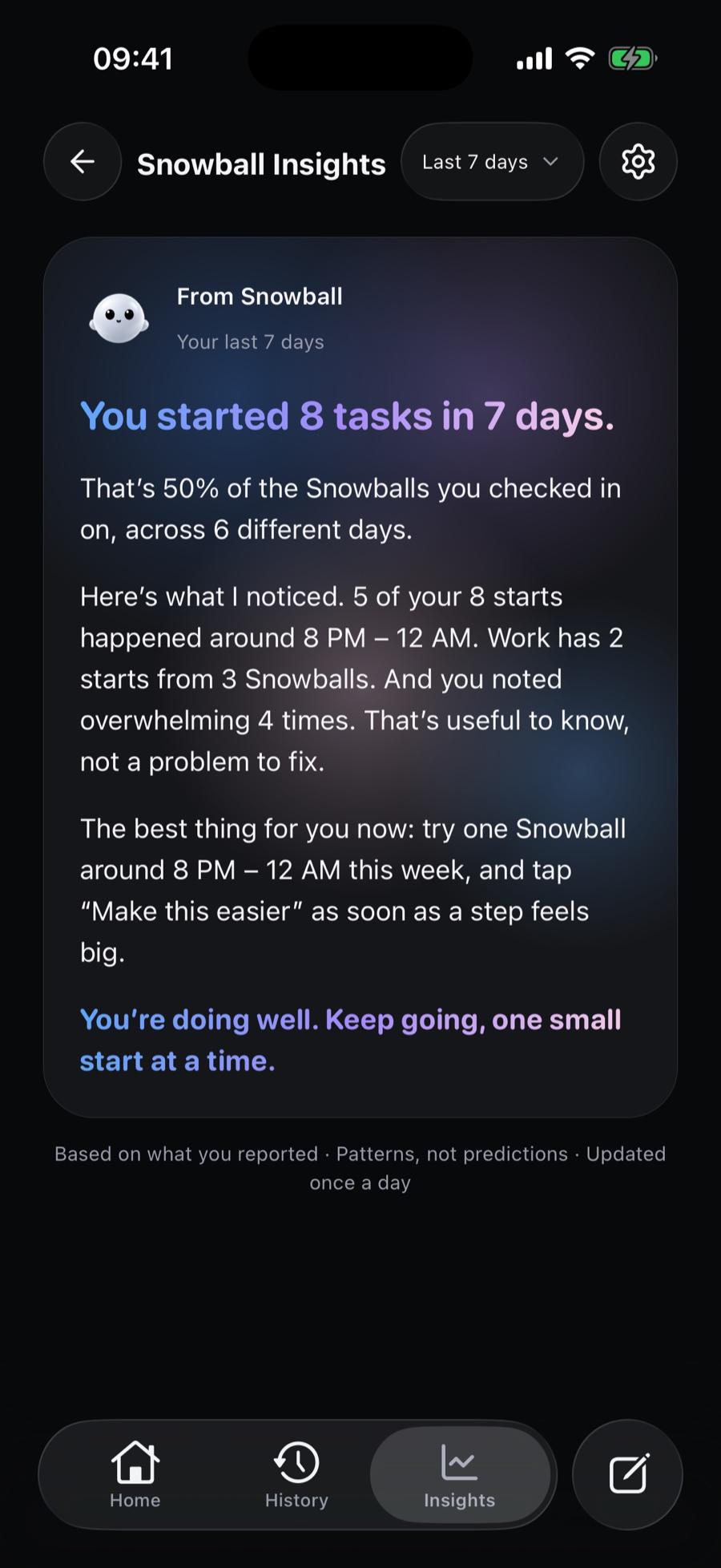
When you’re stuck in waiting mode, it often helps to have someone else choose the first move. Tell Snowball something like “I have 90 minutes before my appointment and I want to clear the kitchen.” It turns that into a short plan with one tiny first move you can do right now, like putting the clean mugs away.
You go one step at a time and mark each one done. When the alarm goes off, stop for today and Snowball keeps your place for later.
Questions people ask
Is waiting mode an official ADHD symptom?
No, waiting mode isn’t a clinical term. It’s a name people use to describe a common experience, and many people with ADHD say it fits them. Struggling with time and starting tasks are often discussed in relation to ADHD, but only a qualified professional can assess whether ADHD is part of the picture for you.
How do I stop waiting mode on a day off?
Plan your gap the night before: write down the appointment time, set alarms for when to leave and choose one small task plus two backups. On the day, start the first task right after breakfast, before the waiting feeling settles in. Starting early is much easier than breaking out of waiting mode once it has taken hold.
Why do I get waiting mode even for fun plans?
The pull comes from having a fixed time later, not from whether the event is stressful. Dinner with friends at 7pm can freeze the afternoon just as much as a dentist visit. The same tools apply: set a leave-time alarm, put what you need by the door and pick small, easy-to-pause tasks for the gap.
What tasks should I avoid before an appointment?
Avoid anything hard to pause or likely to run over: long phone queues, deep cleaning, complex work that needs a long warm-up, or tasks that make a mess, like painting. Also avoid starting anything that might upset you right before you leave, such as reading a difficult email. Save those for a day with more open time.
Sources and further reading (1)
- NHS, “Attention deficit hyperactivity disorder (ADHD)” — General background on ADHD in adults, including difficulties with organization and time, and how to seek an assessment.