The Two-Minute Rule and ADHD: When It Helps, When It Backfires
A classic productivity rule, adjusted for brains that get pulled into side quests.

Quick answer
The two-minute rule says: if a task takes less than two minutes, do it now. With ADHD, it can help clear small tasks, but it can also backfire. Small tasks can pull you away from what you were doing, or turn into long side quests. A gentler adaptation works better: use two minutes as a way to start a task, not finish it.
Using a two-minute start on an inbox you haven’t opened in days
- Set a two-minute timer on your phone.
- Open your email app and scroll to the newest message only.
- Read the subject line and the sender. Nothing else.
- If it needs a reply, star it. If it doesn’t, archive it.
- When the timer rings, stop. Decide fresh: another two minutes, or a break.
Don’t reply or click links inside the two-minute window. The goal is to open the door, not to clear the inbox.
What is the two-minute rule?
The two-minute rule is a popular productivity idea with two common versions. The first: if a task takes less than two minutes, do it immediately instead of writing it down. The second, often used for habits: when starting something new, scale it down to a version that takes two minutes.
Both versions aim at the same problem. Small things pile up, and big things feel too heavy to begin. Two minutes is short enough that your brain doesn’t argue.
Why the two-minute rule can help with ADHD
For many people with ADHD, the hard part isn’t the task. It’s the start. Two minutes lowers the bar so much that starting feels almost free.
- It removes the need to plan or schedule tiny tasks.
- It clears small things before they turn into a pile, like a mug on the desk or a receipt on the counter.
- It gives a quick win, which can make the next thing easier.
- It works well with a timer you can see.
When the two-minute rule backfires with ADHD
The classic “do it now” version assumes you can do a quick task and return to what you were doing. With ADHD, that return trip can be the hard part.
- Side quests. You go to put away a mug, notice the dishes, start cleaning the fridge, and forget the report you were writing.
- Bad estimates. Many tasks that “take two minutes” take ten or twenty. Time can be hard to sense, which we cover in time blindness and starting.
- Constant interruptions. If every small thought becomes an action, you never get deep into anything.
- A day of tiny tasks. You clear twenty small things and feel busy, but the big important task never gets touched.
An adapted two-minute rule for ADHD
Instead of “finish anything that takes two minutes,” try “start anything for two minutes.” The rule becomes an on-ramp, not a to-do sweeper.
- Pick the task you’re avoiding, not the easy one next to it.
- Choose the very first move, like opening the document or picking up the sponge.
- Set a visible two-minute timer.
- Do that move only. Keep going if it feels okay.
- When the timer ends, stop and choose: another two minutes, or a real break.
Because you always get a choice at the end, the rule feels safe. That safety is what makes starting easier.
What to do with small tasks that pop up mid-focus
When you’re in the middle of something and remember a small task, don’t do it and don’t try to hold it in your head. Write it down in one place, like a note or a “later” list, and go back to what you were doing.
Then, at a set point, like after lunch, do a short batch of two-minute tasks together. That way small tasks still get done without breaking your focus every few minutes. A brain dump at the end of the day works too.
How to know if a task really takes two minutes
Quick test: can you do it without opening anything new, looking anything up, or making a decision? If yes, it’s probably two minutes. Putting a cup in the dishwasher passes. “Reply to the landlord” usually doesn’t, because it may involve checking dates or rereading a lease.
If it fails the test, it’s not a two-minute task. Give it a two-minute start instead, like opening the message and reading it once.
Two minutes is enough, even if you stop
Some days, two minutes will be all you manage. That’s still useful. You’ve touched the task, lowered the dread for next time, and you know where to pick it up. On low energy days, two minutes of a gentle version is a real win.
If you notice that starting is hard nearly every day, a doctor or qualified professional can help look at what’s going on. Trouble starting doesn’t on its own mean ADHD.
How Snowball helps with a two-minute start
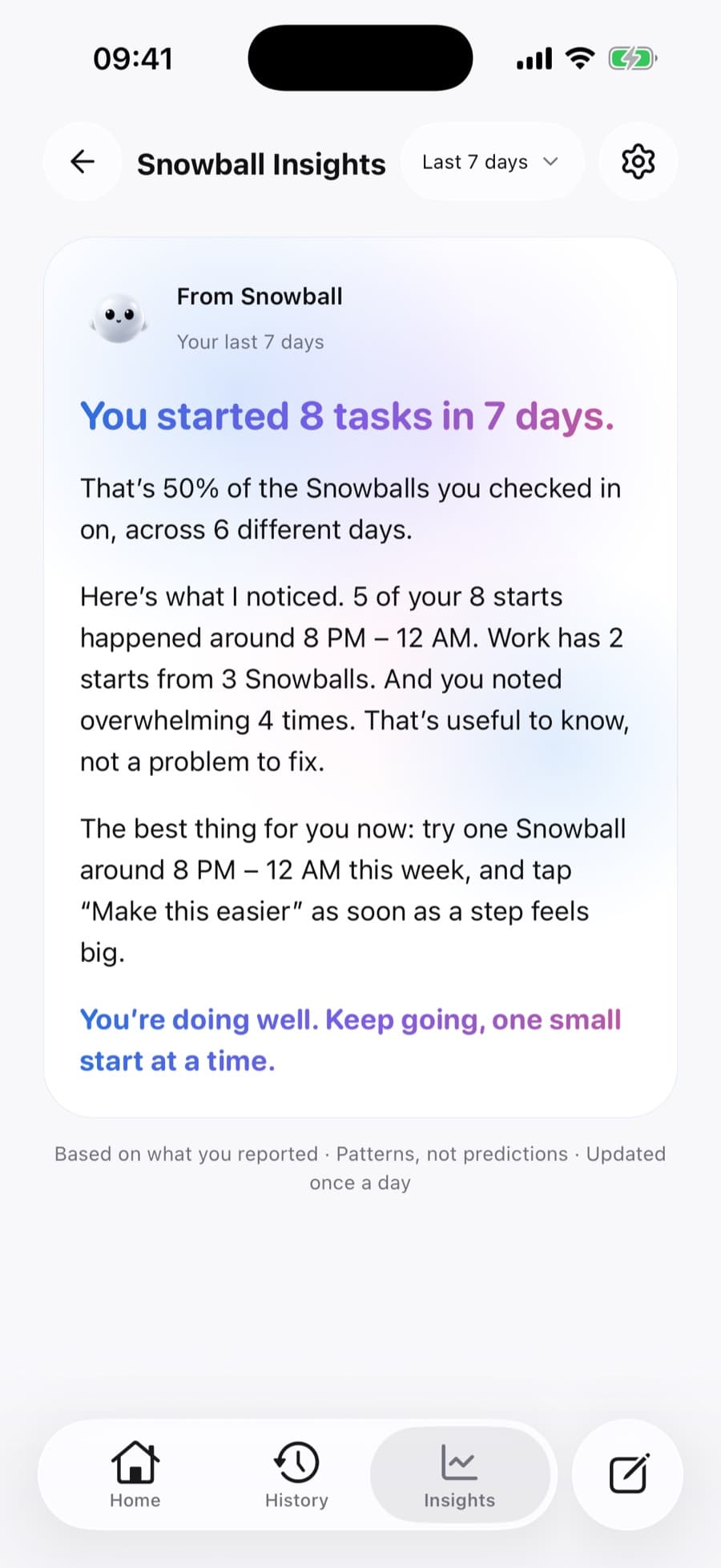
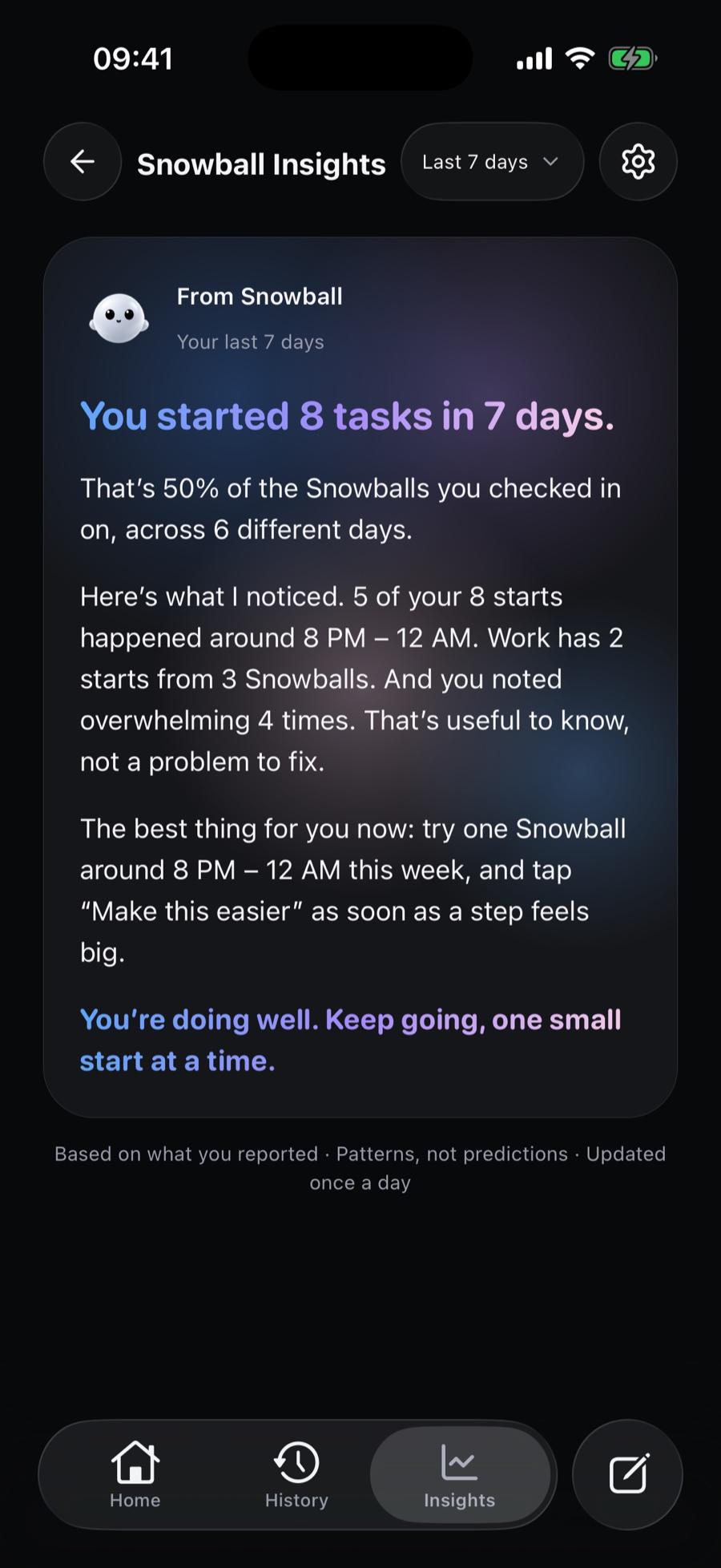
Snowball is built around the adapted rule. Type what you’re stuck on, and it gives you a short plan that ends with the task done, plus a tiny first move for step one. If a step feels big, “Break it down” splits it into moves of a minute or two each.
If a small thought pops up while you’re working, you can catch it for later instead of acting on it right away. Mark each step done, take the small win, and choose whether to keep going.
Questions people ask
Does the two-minute rule work for ADHD?
It can, especially the version where you start a task for two minutes rather than finishing every quick task immediately. The “do it now” version can lead to side quests and constant interruptions. Try both and notice which one leaves you with more done at the end of the day.
What’s the difference between the two-minute rule and a two-minute start?
The two-minute rule usually means doing any task that takes under two minutes right away. A two-minute start means beginning a bigger task for just two minutes, with permission to stop. The first clears small tasks. The second helps you start tasks you’ve been avoiding.
What if two minutes turns into two hours?
If it’s the task you meant to do, great. If you drifted into something else, gently stop, write down what you were doing, and return to the original task. A visible timer and a written “now doing” note on your desk can help you notice drift sooner.
Is two minutes really enough to make a difference?
Yes, because the hardest part is often the first moment. Two minutes breaks the freeze, gives you information about the task, and makes it easier to come back. Many people find they keep going once they’ve started. If not, two minutes is still progress.