Focus & motivation

Dopamine Menu for ADHD: What It Is and How to Build Your Own

A dopamine menu is just a list of things that make you feel better or help you get going, written down before you need it.

Quick answer

A “dopamine menu” is a popular name for a personal list of enjoyable or energizing activities, arranged like a restaurant menu: quick starters, bigger mains, and treats saved for later. People with ADHD use it to choose something on purpose instead of defaulting to scrolling. The name is a metaphor; the useful part is having options ready before you need them.

A sequence to try

Using your menu when you’re stuck on the couch at 3 p.m.

  1. Notice you’ve been scrolling, and put the phone face down on the cushion.
  2. Open your menu, taped inside a kitchen cupboard or saved as a phone wallpaper.
  3. Pick one “starter”: put on one favorite song.
  4. Stand up while it plays and refill your water glass.
  5. When the song ends, choose: one more starter, or the first tiny move of the task you’re avoiding, like opening the laptop.

The menu isn’t a reward you have to earn. It’s a way out of the stuck spot. Swap the song for whatever your quickest starter is.

What is a dopamine menu?

A dopamine menu is a list of activities you know lift your mood, give you energy or help you focus, grouped by how much time and effort they take. The term became popular in ADHD communities online, and it borrows the layout of a restaurant menu to make choosing easier.

Despite the name, it isn’t a medical tool and it doesn’t measure or change anything in your brain. Think of “dopamine” here as shorthand for “things that feel good or get me moving”. The real value is practical: when you’re bored, flat or stuck, you don’t have to invent an idea on the spot.

Why people with ADHD find it useful

When you’re under-stimulated or avoiding something, the easiest option wins, and the easiest option is usually your phone. Twenty minutes later you feel worse, not better. A menu puts better options in front of you at the exact moment decisions are hardest.

It also turns “I should do something nice for myself” into a specific action. “Rest” is vague. “Lie on the floor with one song on” is something you can actually do.

How to build a dopamine menu

Build it on a decent day, not when you’re already stuck. You’re writing instructions for future you.

  1. Spend 10 minutes listing anything that reliably makes you feel a bit better or more awake. Aim for 15 to 20 ideas.
  2. Next to each, write roughly how long it takes and whether it needs money, other people or going out.
  3. Sort them into sections: starters, mains, sides, desserts and specials (see below).
  4. Cross out anything that tends to swallow hours or leaves you feeling worse.
  5. Put the menu somewhere visible: on the fridge, inside a cupboard door or as a phone wallpaper.

Dopamine menu ideas by section

Your menu should be personal, so treat these as prompts, not rules. Keep each item small and specific.

  • Starters (1–5 minutes): one song, splash cold water on your face, step outside, make tea, stretch, text a friend a meme.
  • Mains (20–60 minutes): a walk with a podcast, cooking something simple, a short workout, a hobby project, calling someone you like.
  • Sides (pair with a boring task): music, a favorite drink, a candle, an audiobook while folding laundry.
  • Desserts (enjoy, but set a limit): a TV episode, a game, social media with a timer.
  • Specials (now and then): a concert, a day trip, a new book, a class.

How to use “sides” to start boring tasks

Sides might be the most useful part of the menu. They pair something pleasant with something dull, so the dull task feels less flat. Put on a playlist that only plays while you wash dishes. Save your favorite podcast for the weekly grocery order.

Another strong side is other people. Working next to a friend, in person or on a video call, can make starting easier. That idea has its own name: body doubling.

Common dopamine menu pitfalls

A menu is meant to help you move, not become another thing to feel bad about. Watch out for these.

  • Making it so long and pretty that you never use it. A short, scruffy list works.
  • Only listing desserts. If everything is a screen, you’ll end up back where you started.
  • Using it as a reward system you have to earn. On hard days, it’s okay to pick a starter first.
  • Expecting it to replace rest, sleep, food or support. It’s one small tool.
  • Never updating it. Things that worked last month can get stale.

On days when your energy is very low, choose the smallest starter you can, and see our guide to low energy days.

From the menu back to the task

A dopamine menu helps you get unstuck, but it won’t do the task for you. The bridge is a tiny first move. After a starter, give yourself just one step toward the thing you were avoiding: open the document, take out one form, put one plate in the sink.

If that still feels like too much, try the two-minute rule, adapted so you only commit to two minutes of starting. Struggling with motivation sometimes doesn’t mean you have ADHD; if it’s affecting your life a lot, a qualified professional can help.

How Snowball helps after you pick from the menu

Snowball is built for that moment after the starter, when you’re ready to try the real task. Type what you’re stuck on and you get a short plan plus one tiny first move you can do right now. Each step you finish counts as a small win.

If a step still feels too big, “Break it down” splits it into moves of a minute or two. And on flat days, Low Energy mode gives the same plan with gentler ways to start.

Questions people ask

Does a dopamine menu actually increase dopamine?

There’s no reason to treat it as a way to change brain chemistry. “Dopamine menu” is a catchy name for a list of activities that help you feel better or get moving. It can still be very useful in practice, because it gives you ready-made choices when you’re stuck or bored.

What should be on a dopamine menu?

Include things that reliably help you and fit different amounts of time: quick starters like music or stepping outside, longer mains like a walk or cooking, sides that make boring tasks nicer, and a few limited desserts like an episode of a show. Make every item specific enough to do immediately.

Is a dopamine menu only for people with ADHD?

No. The idea became popular in ADHD communities, but anyone who gets stuck, bored or pulled into endless scrolling can use one. It’s simply a pre-made list of better options. It isn’t a diagnosis tool or a treatment, and it works alongside other support rather than replacing it.

Where should I keep my dopamine menu?

Somewhere you’ll see it when you’re stuck. Popular spots include the fridge, the inside of a cupboard door, next to your desk or as your phone’s lock screen. If you have to go looking for it, you probably won’t use it when it counts.

How is a dopamine menu different from a reward system?

A reward system asks you to earn something by finishing work first. A dopamine menu is for choosing something helpful at any time, including before you start. On hard days, picking a quick starter first can be what makes beginning the task possible at all.
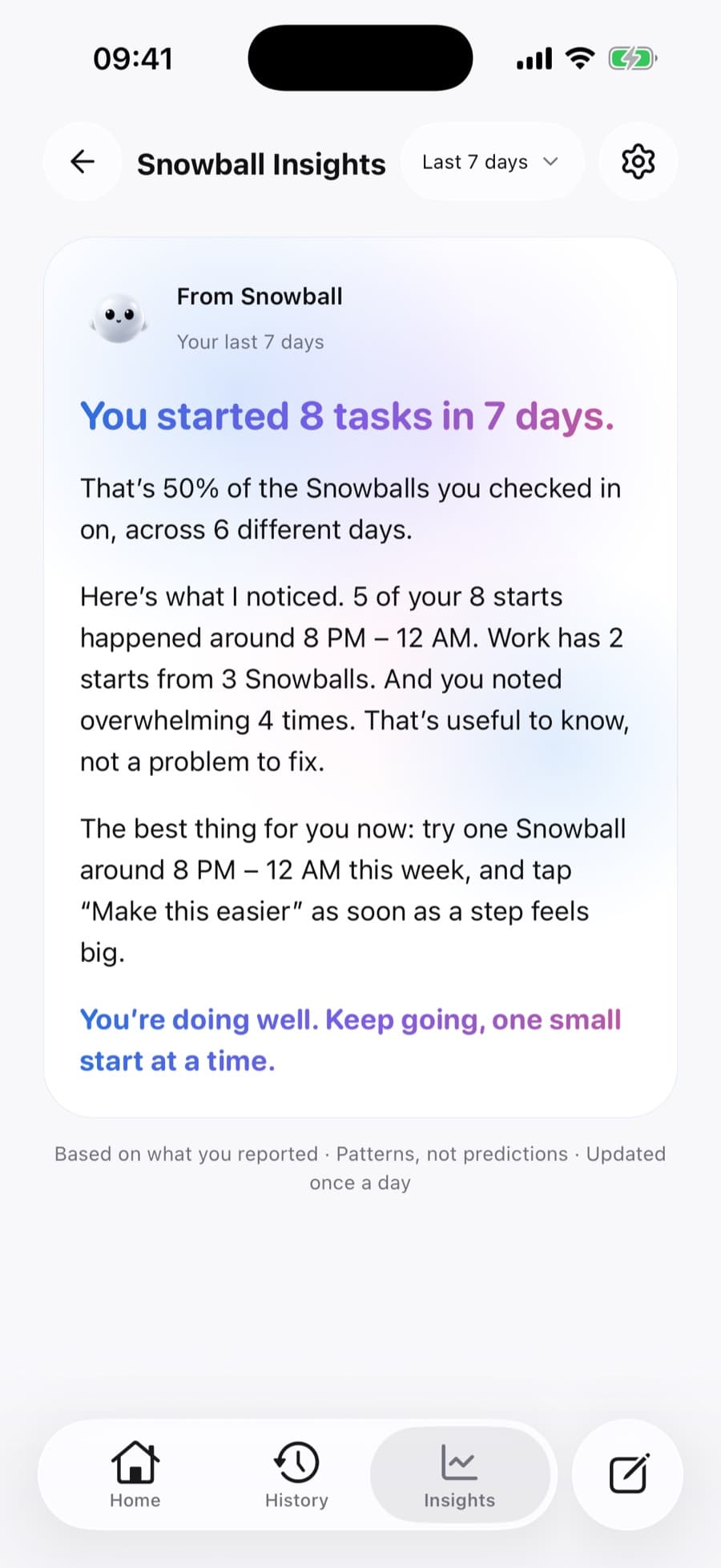
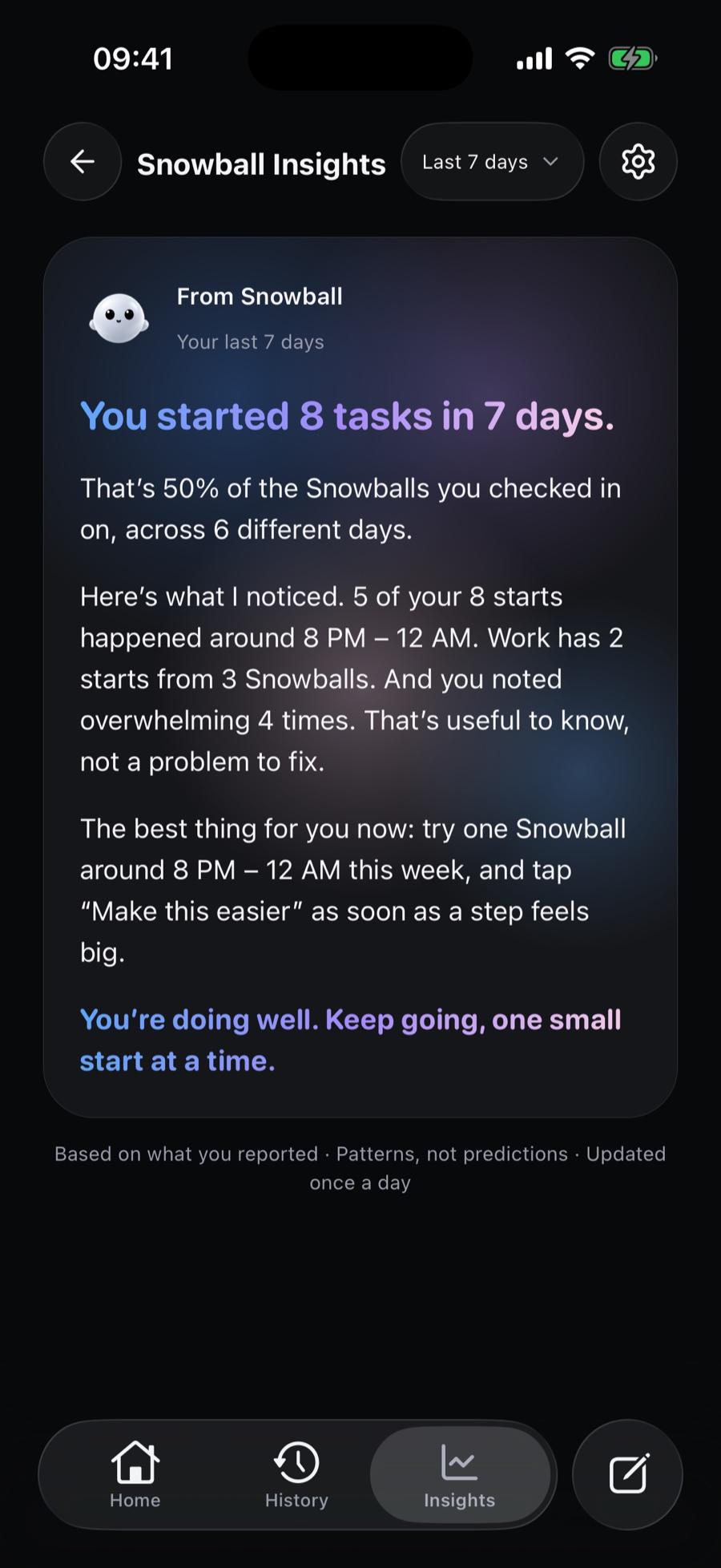
Not medical adviceThis article is general information about starting tasks, written by the Snowball team. It isn’t medical advice, diagnosis or treatment. If difficulties are ongoing or affect your daily life, talk to a doctor or another qualified professional. Examples are illustrative; product descriptions are about our own app. Corrections: support page. Our approach.
Keep reading

Related guides

All Focus & motivation →
Keep going

Explore

A LITTLE START GOES A LONG WAY

The hardest part?
You’re right before it.

You don’t need a perfect plan or a burst of motivation. Just one small action. Let’s find yours.

Find my first step Free to try. No account needed.
A personal note from Snowball about your starting patternsA personal note from Snowball about your starting patterns